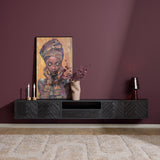
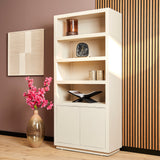
A shoe cabinet keeps your hallway organized, tidy, and neat. All shoes neatly behind doors, out of sight but always within reach. Discover our collection of shoe cabinets and find the model that suits your hallway and your shoe collection.
A shoe cabinet is the most organized and tidy solution for storing shoes in the hallway. All shoes are hidden behind doors, making the entrance immediately appear calmer, more spacious, and neater. At MooierThuis, you'll find shoe cabinets in all sizes, styles, and designs, from a narrow single-row cabinet for a compact hallway to a wide cabinet with ample capacity for large households. For every hallway and every shoe collection.
Why choose a shoe cabinet over an open shoe rack?
A shoe cabinet offers several concrete advantages over an open shoe rack. Firstly, the hallway is immediately tidier and calmer when shoes are behind closed doors. There is no visible clutter, even if the shoes have been placed somewhat haphazardly. Secondly, a closed cabinet better protects shoes from dust, moisture, and direct sunlight, which extends their lifespan. And thirdly, a shoe cabinet gives the hallway a finished, cohesive look that an open rack cannot provide.
An open shoe rack is more practical if you want to quickly grab shoes daily without having to open a door. Both have their advantages. In many households, a combination of both is the smartest choice: a shoe cabinet for shoes used less frequently and a small open rack for daily worn pairs.
Types of Shoe Cabinets: Which One Is Right for You?
Tilt-out Shoe Cabinet
The most common shoe cabinet in the Netherlands has one or more tilt-out door mechanisms. The doors fold open forwards and simultaneously lift the shoes on the shelf, making them easy to grab without bending down. A tilt-out shoe cabinet is cleverly designed, takes up little depth, and is an excellent choice for narrow hallways. When choosing, pay attention to the swing space required by the tilt-out doors for the cabinet.
Shoe Cabinet with Regular Doors
A shoe cabinet with regular hinged or sliding doors has adjustable or fixed shelves on which shoes are placed. It generally offers more flexibility in its layout than a tilt-out model and is also suitable for higher shoes and boots if the shelves are adjustable. Opt for a model with sliding doors if the hallway is narrow and there is no swing space for hinged doors.
Narrow Shoe Cabinet
A narrow shoe cabinet of 30 to 50 cm wide fits even the narrowest hallway or corridor. It offers less capacity than a wider cabinet but is the ideal solution when available wall space is limited. Combine two narrow shoe cabinets side-by-side if you need more capacity but no wide wall space is available.
Tall Shoe Cabinet
A tall shoe cabinet maximizes vertical space and offers the most storage on the smallest footprint. Ideal for large households with many shoes or for people who also want to store seasonal shoes, boots, and accessories. Combine a tall shoe cabinet with a hallway bench next to it for a complete and functional hallway solution.
Styles and Materials: The Right Shoe Cabinet for Every Hallway
Shoe cabinets come in a wide variety of styles and finishes. A white shoe cabinet is timeless, brightens the hallway, and fits into almost any interior. A shoe cabinet with a wood look or natural wood finish gives the entrance a warmer, Scandinavian atmosphere. For a modern or industrial look, choose a model with a dark finish in anthracite or black. And a shoe cabinet with a combination of wood and metal is an excellent match for a contemporary, varied interior.
When choosing, also pay attention to the interior finish. A shoe cabinet with a light interior is more organized and easier to clean than a model with a dark interior. Combine the shoe cabinet with a matching wall coat rack in the same material or color for a cohesive and well-maintained hallway appearance.
How many pairs of shoes fit in a shoe cabinet?
The capacity of a shoe cabinet depends on its width, height, and type of doors. Some guidelines to help with your choice:
Narrow cabinet of 50 cm wide: typically space for 8 to 12 pairs of shoes, depending on the height and number of shelves.
Medium-width cabinet of 80 to 100 cm wide: space for 16 to 24 pairs of shoes at a standard height of 100 to 120 cm.
Wide or tall cabinet: space for 30 pairs or more, depending on the configuration and size of the shoes.
Keep in mind that larger shoe sizes take up more space per shelf. A shelf that offers space for four pairs at shoe size 38 might only offer space for two pairs at shoe size 46. Always check the shelf depth and shelf height in the product specifications before ordering.
Smartly Combining Shoe Cabinets in the Hallway
A shoe cabinet is most effective as part of a complete hallway solution. Combine the cabinet with a hallway bench next to it for a seating area when putting on shoes. Add a wall coat rack or a standing coat rack for coats and bags. And hang a mirror on the wall for a spacious effect and a final check before you leave the house. With these four elements, your hallway is complete, functional, and stylish.
Combine Your Shoe Cabinet for a Complete Hallway
Shoe racks — open addition for daily used shoes next to the cabinet
Shoe benches — seating comfort and shoe storage in one piece of furniture
Slipper racks — compact rack for slippers and slip-ons by the door
Hallway benches — a comfortable seating area next to the shoe cabinet
Wall coat racks — for coats and bags above or next to the shoe cabinet
At MooierThuis, you can easily order your shoe cabinet online. All dimensions, capacities, and materials are clearly stated per product. We deliver quickly throughout the Netherlands and Belgium. Do you have a question about the right size or type of shoe cabinet for your hallway? Our customer service will be happy to assist you.
Frequently Asked Questions about Shoe Cabinets
What is a tilt-out shoe cabinet and how does it work?
A tilt-out shoe cabinet has doors that fold open forwards and simultaneously lift the shoes on the shelf upwards. This makes it easier to grab shoes without bending down. The mechanism works via hinges and spring-loaded supports that hold the door in the open position. A tilt-out shoe cabinet is cleverly designed, takes up little depth, and is therefore ideal for narrow hallways where space is scarce.
How deep should a shoe cabinet be at a minimum?
A shoe cabinet should be at least 30 cm deep for storing standard shoes. For larger shoe sizes or wide shoes, a depth of 35 to 40 cm is more comfortable. In a tilt-out shoe cabinet, the internal depth is usually 28 to 32 cm, which is sufficient for most shoe sizes up to size 46. Always check the internal depth in the product specifications before ordering.
Can I store tall boots in a shoe cabinet?
That depends on the internal shelf height of the cabinet. Standard shelves are typically 15 to 18 cm high, which is not sufficient for tall boots. Choose a shoe cabinet with adjustable or removable shelves so you can arrange a compartment specifically for tall boots. Some models have a special boot compartment with a greater internal height. Always check the internal dimensions per compartment in the product specifications.
How do I clean a shoe cabinet?
Remove all shoes and regularly clean the inside of the cabinet with a lightly damp cloth. Use a mild all-purpose cleaner for stubborn dirt. Then let the cabinet dry thoroughly before putting the shoes back. Clean the exterior with a dry or lightly damp cloth, depending on the cabinet's material. Avoid aggressive cleaning agents that can damage the finish.
Is a shoe cabinet also suitable for an apartment without a hallway?
Yes, absolutely. A narrow or compact shoe cabinet also fits next to the front door of an apartment without a separate hallway. Choose a model that fits the available space next to the door in terms of height and width. A narrow tall shoe cabinet maximizes vertical space on a small footprint, making it ideal for apartments with limited entrance space.